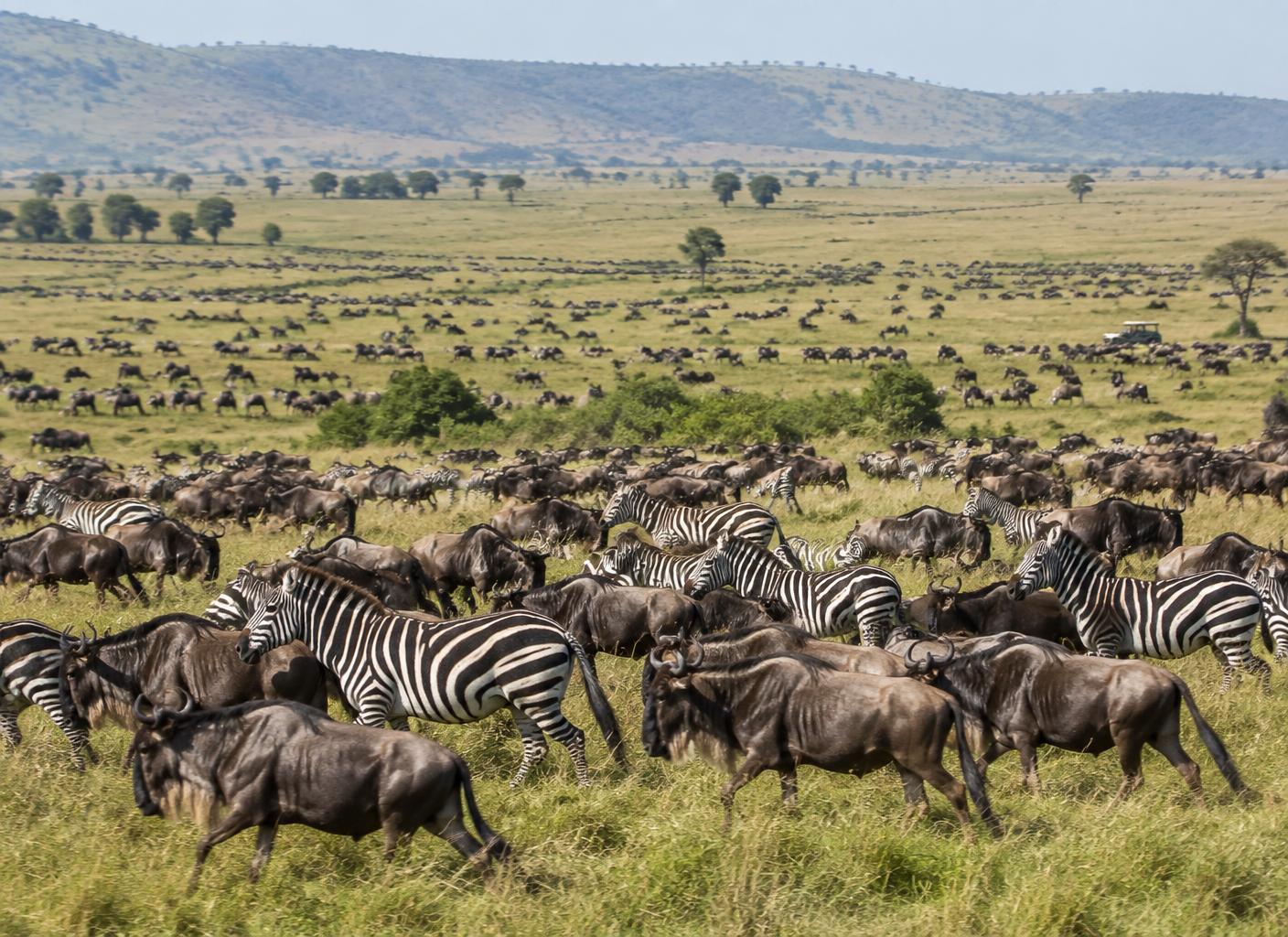
The Great Migration is often described as one of the world's greatest wildlife spectacles, but it is better understood as an enormous ecological cycle. Millions of wildebeest and other grazing animals move through the Serengeti ecosystem following rainfall and fresh grass. Their movement influences predators, birds, vegetation and the entire rhythm of the landscape.
During the early months of the year, the southern Serengeti and surrounding areas can become a vast nursery. Newborn calves appear across the plains and predators are drawn toward the abundance. Later, the herds begin moving northwards, passing through different parts of the Serengeti before reaching the northern ecosystem and, depending on conditions, the Mara River.
The river crossings have become one of Africa's most famous wildlife experiences, but they should never be treated as a guaranteed performance. Nature does not operate according to a travel brochure. The animals may arrive earlier or later, remain on one side of the river, cross when you are elsewhere or move through a completely different area. The skill is therefore not promising a crossing; it is designing the itinerary intelligently around seasonal patterns and giving you enough time and flexibility to experience the migration as it actually unfolds.
We consider your travel dates, the likely location of the herds, accommodation availability, road conditions, internal flights and your appetite for remoteness before recommending a route. For some travellers, the southern calving season will be far more rewarding than the northern crossings. For others, the north provides exactly the combination of wilderness and migration they are seeking.
The Great Migration is not something to chase. It is something to enter, observe and respect.