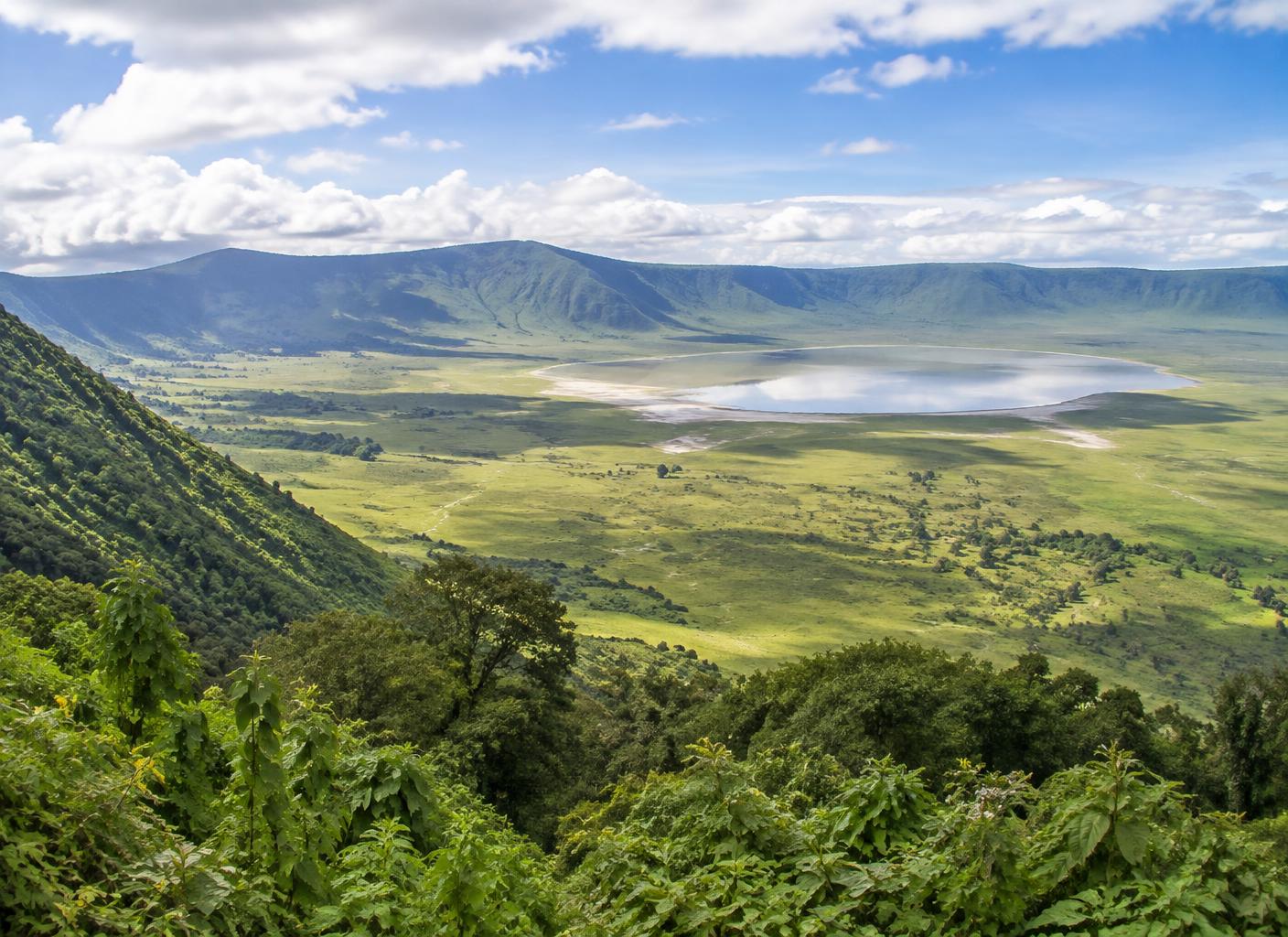
Day 1: Londorossi Gate (2,100 m) to Mti Mkubwa Camp (2,650 m)
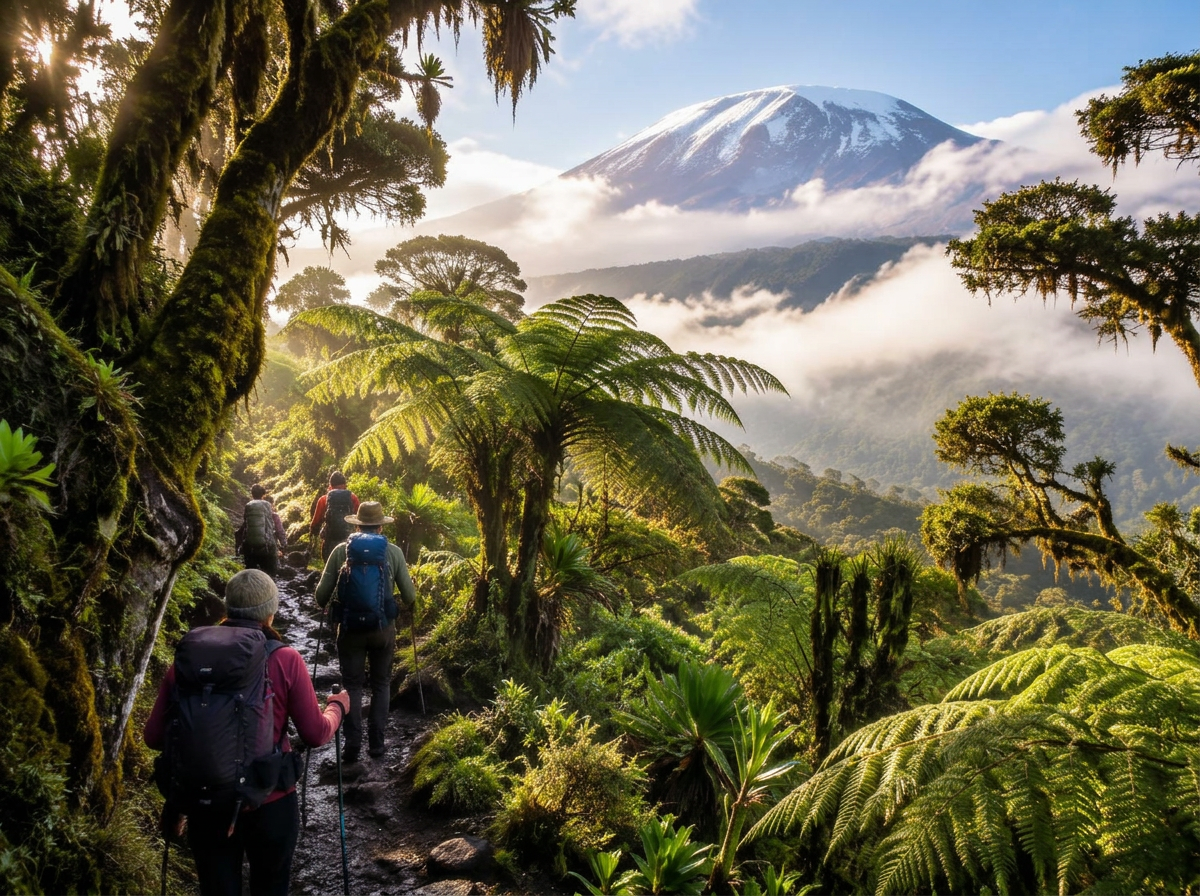
You cover 6 kilometers from Londorossi Gate to Mti Mkubwa Camp at 2,650 meters, taking three to four hours through pristine, remote rainforest. The drive to Londorossi Gate from Moshi takes about three hours, passing through villages and farmland before entering the park. You register at the gate, meet your guide and porters, and begin walking through the forest. The trail is narrow and muddy, winding beneath towering fig trees, moss-covered trunks, and ancient ferns. Mti Mkubwa means "Big Tree," named for the massive trees surrounding the camp. The camp is quiet and remote, with few other climbers. You eat dinner in the mess tent and sleep.
Day 2: Mti Mkubwa Camp (2,650 m) to Shira 1 Camp (3,500 m)
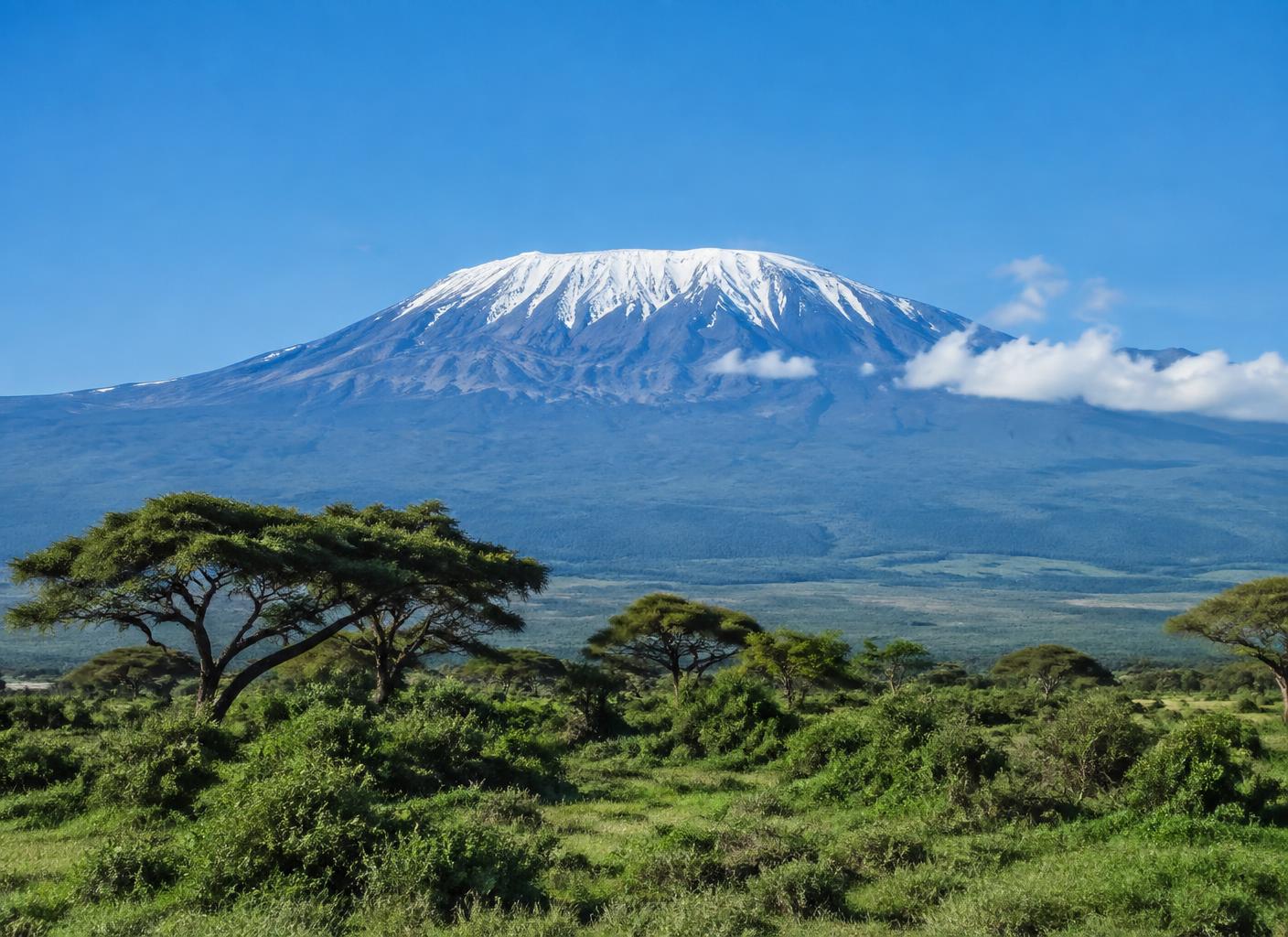
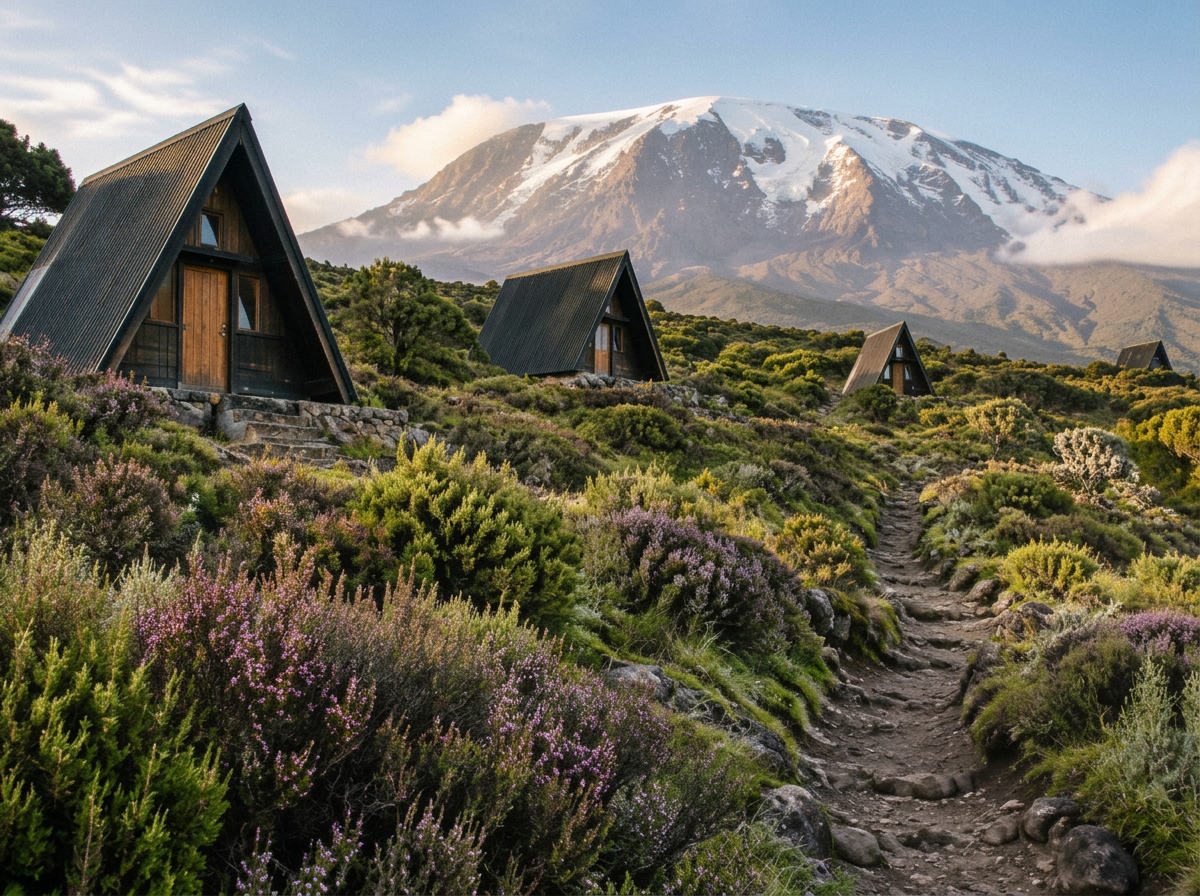
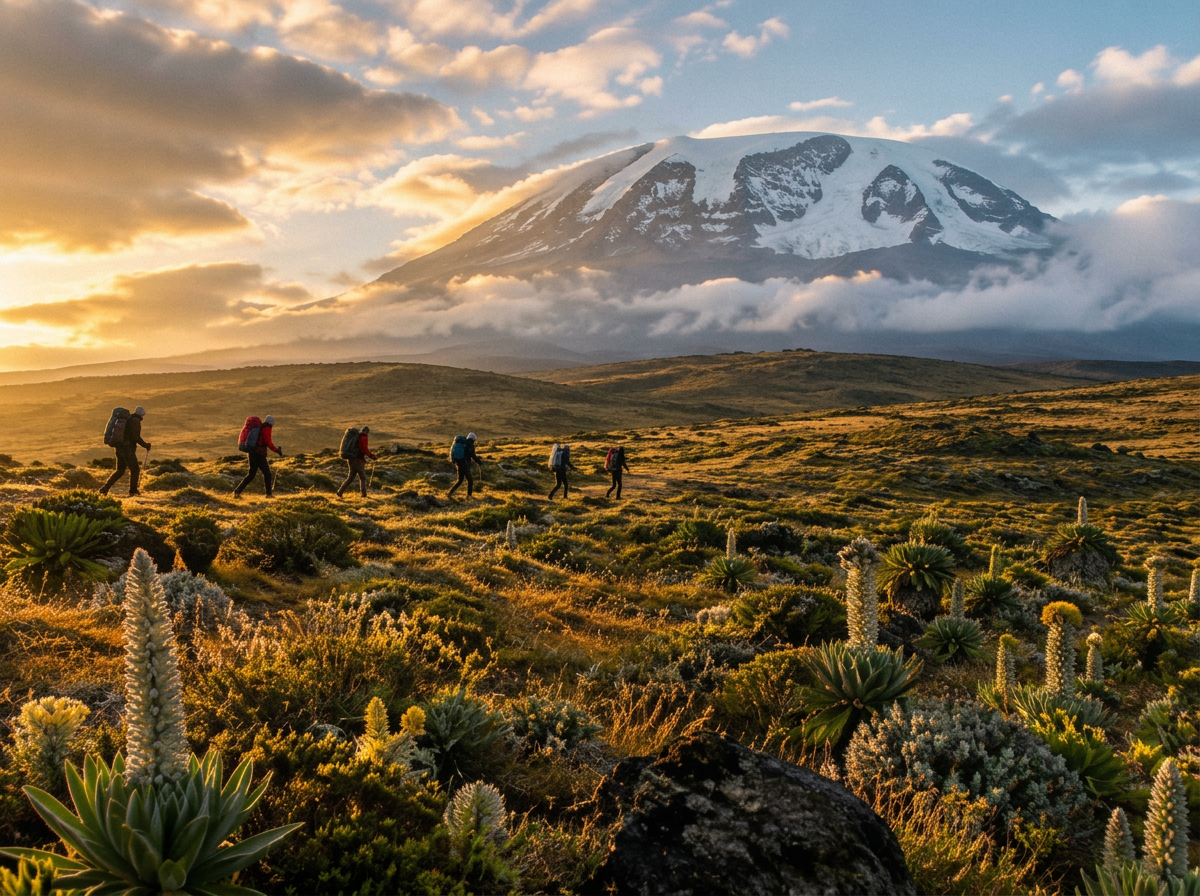
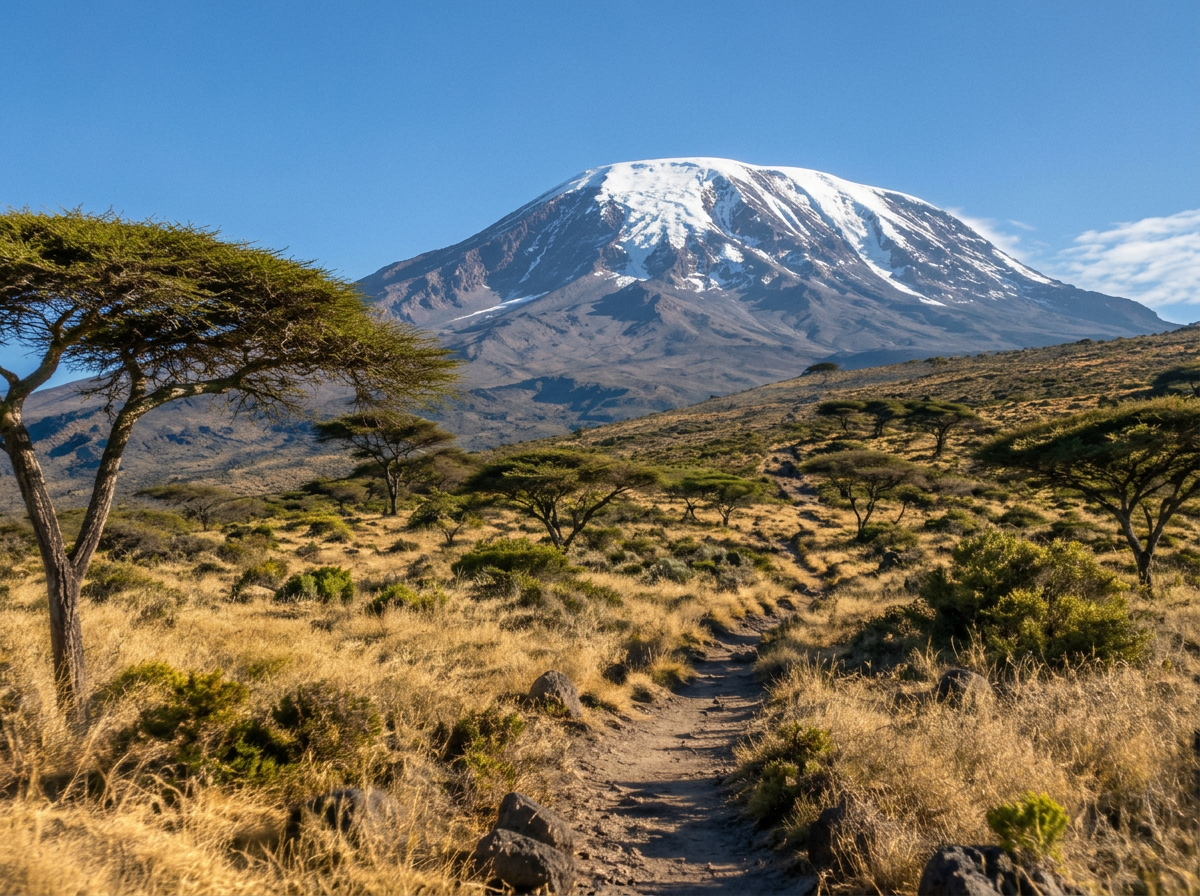
You cover 8 kilometers from Mti Mkubwa to Shira 1 Camp at 3,500 meters, taking five to six hours and gaining 850 meters. You leave the forest behind and enter moorland, passing giant heather, protea, and lobelia. The trail climbs steadily, and the views open up — you get your first clear views of Kibo across the Shira Plateau. You stop for lunch beside a rocky outcrop. Shira 1 Camp sits at the edge of the plateau, with panoramic views of the surrounding landscape. The camp is exposed and windy, so pitch your tent with the door facing away from the wind. The sunset here is spectacular, casting pink and orange light on Kibo. You eat dinner early and sleep.
Day 3: Shira 1 Camp (3,500 m) to Shira 2 Camp (3,850 m)
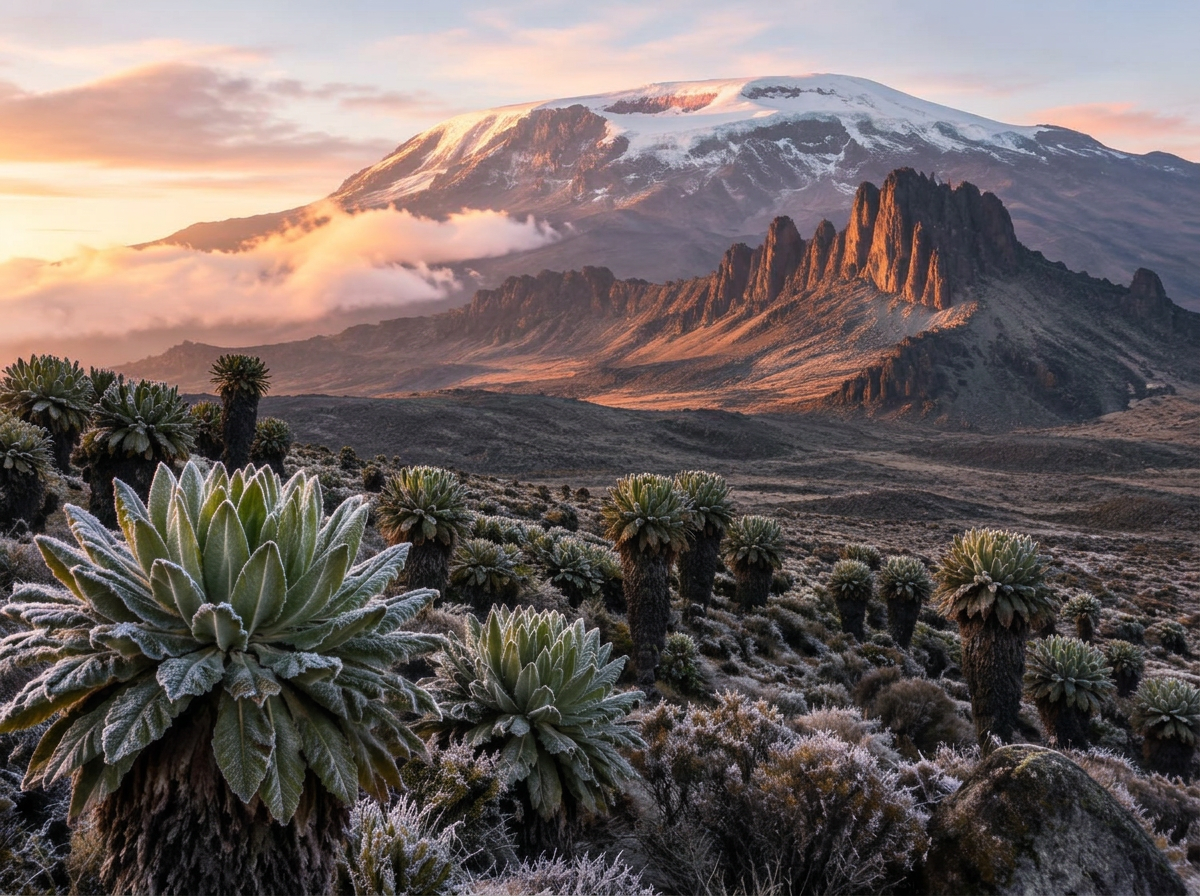
You cover 7 kilometers from Shira 1 to Shira 2 Camp at 3,850 meters, taking three to four hours. This is a short, gentle day across the plateau, giving your body time to acclimatize. You cross the Shira Plateau, a massive volcanic caldera that offers panoramic views of Kibo and the surrounding landscape. You stop for lunch beside a rocky outcrop. In the afternoon, you take an acclimatization walk to Shira Cathedral, a volcanic rock formation that offers stunning views of the plateau and the mountain. Shira 2 Camp is larger than Shira 1, with more climbers and better facilities. You eat dinner in the mess tent and sleep.
Day 4: Shira 2 Camp (3,850 m) to Lava Tower (4,630 m) to Barranco Camp (3,950 m)
You cover 10 kilometers from Shira 2 to Lava Tower at 4,630 meters and then descend to Barranco Camp at 3,950 meters, taking six to eight hours. You gain 780 meters and descend 680 meters, following the "climb high, sleep low" principle. The trail climbs steadily across the alpine desert, passing volcanic rock and sparse lichen. Lava Tower is a 300-meter volcanic plug that marks the highest point of the day. You eat lunch here, then begin the steep descent into the Barranco Valley. The descent is hard on the knees, so trekking poles are useful. As you descend, the landscape changes dramatically — you enter a lush, sheltered valley filled with giant Senecio trees and lobelia. Barranco Camp sits beneath the Barranco Wall, and the views of the wall and the Heim Glacier are breathtaking. The camp is busy, and the temperature is milder than at Shira.
Day 5: Barranco Camp (3,950 m) to Karanga Camp (4,035 m)
You cover 5 kilometers from Barranco Camp to Karanga Camp at 4,035 meters, taking four to five hours. The highlight is the Barranco Wall, a 300-meter near-vertical scramble that is not technical but requires hands-on climbing and careful footwork. The wall can be intimidating for those with a fear of heights, but the holds are good and the guides are experienced. The climb takes around 90 minutes, and the views from the top are spectacular — you can see the Heim Glacier, the Karanga Valley, and the southern slopes of Kibo. After the wall, the trail undulates across a rocky ridge before descending into Karanga Valley. You cross a stream at the bottom, then climb steeply to Karanga Camp. The camp is quieter than Barranco and offers stunning views of the sunset over the valley. You eat dinner early and rest.
Day 6: Karanga Camp (4,035 m) to Barafu Camp (4,673 m)
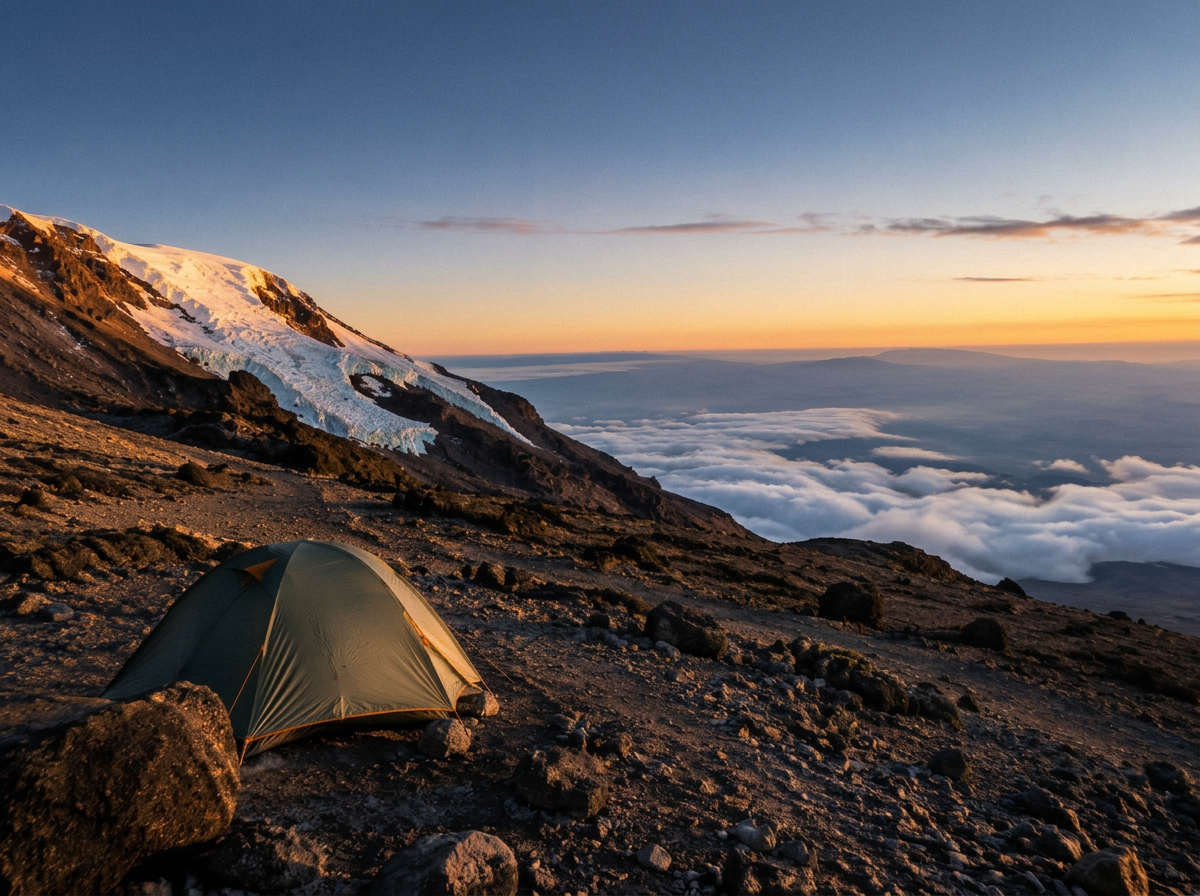
You cover 4 kilometers from Karanga Camp to Barafu Camp at 4,673 meters, taking three to four hours. Despite the short distance, the altitude makes it feel harder than it looks. You climb steadily across the alpine desert, passing rocky outcrops and scattered boulders. Barafu means "ice" in Swahili, and the camp is cold, exposed, and windy. You arrive by early afternoon, eat a hot lunch, and then rest in your tent. In the late afternoon, your guide briefs you on the summit night — what to wear, what to carry, and how to pace yourself. You eat an early dinner, usually around 5 PM, and try to sleep by 6 or 7 PM. Most climbers find it hard to sleep due to the altitude and nerves. You set your alarm for 11 PM.
Day 7: Barafu Camp (4,673 m) to Uhuru Peak (5,895 m) to Mweka Camp (3,100 m)
This is summit day, covering 17 kilometers over 12 to 14 hours. You wake at 11 PM, eat a light snack, and start climbing at midnight in darkness. The trail is steep and rocky, and the cold is intense — temperatures can drop to minus 20 degrees Celsius with wind chill. You climb slowly, one step at a time, resting every hour for a few minutes. You reach Stella Point at 5,756 meters at dawn, where you are rewarded with a stunning sunrise over the crater rim. From Stella Point, the trail flattens out and follows the crater rim for about an hour to Uhuru Peak at 5,895 meters. You celebrate, take photos, and sign the summit register. The descent begins immediately — you retrace your steps to Stella Point, then descend rapidly to Barafu Camp for a hot lunch. After lunch, you continue descending to Mweka Camp at 3,100 meters, passing through alpine desert and heath. The descent is long and hard on the knees, but the sense of achievement is overwhelming. You eat dinner and sleep deeply.
Day 8: Mweka Camp (3,100 m) to Mweka Gate (1,640 m)
You cover 10 kilometers from Mweka Camp to Mweka Gate at 1,640 meters, taking three to four hours. You descend through the rainforest, passing ferns, fig trees, and moss-covered trunks. The trail is muddy and slippery, so watch your footing. You may see monkeys and birds along the way. At Mweka Gate, you sign out with the park authorities and receive your summit certificate — green for reaching Stella Point, gold for reaching Uhuru Peak. You say goodbye to your porters and guides, tip them according to the recommended guidelines, and transfer to your hotel in Moshi or Arusha. You will likely spend the rest of the day resting, eating, and celebrating.